The Luxury and Classic Car Market: How the World’s Most Expensive Cars Transformed into Alternative Investment Assets
The Luxury and Classic Car Market: How the World’s Most Expensive Cars Transformed into Alternative Investment Assets

Your comprehensive guide to the investment-grade car market and the world’s most expensive cars sold at auction. Discover HAGI indices, pricing criteria for rare vehicles, and an analysis of financial investment returns in the hypercar sector.
Luxury cars and hypercars are no longer merely modes of transport or symbols of wealth; they have evolved into a distinct asset class known in financial markets as the “Collector Car Market.” As investors and hedge funds increasingly diversify their portfolios with tangible and alternative assets, sales of rare cars have seen record-breaking price surges—often outperforming traditional stock indices and precious metal markets.
In this article, we explore the concept of the “car market” as an investment vehicle and the key financial indices that track its performance. We also present a list of the most expensive modern and classic models, alongside the economic factors that drive their prices into the tens of millions of dollars.
What is the Collector Car Market?
There is no single stock exchange for cars featuring real-time trading screens; instead, the term refers to an integrated network of major global auction houses (such as RM Sotheby’s, Gooding & Company, and Bonhams) working alongside independent financial benchmark indices. The most prominent of these include:
HAGI (Historic Automobile Group International) Index: A specialized financial index modeled after the S&P 500. It accurately measures the performance and value of rare cars by tracking thousands of verified transactions involving brands such as Ferrari, Porsche, and Mercedes-Benz.
Hagerty Market Index: This index issues periodic reports tracking the values of investment-grade vehicles and insurance valuations, categorizing them into segments such as “Blue Chip” cars and post-war era vehicles.
Investment Comparison: The Most Expensive Cars in Auction History and Modern Production
The significant market value within the collector car sector is distributed across two categories: rare classic cars with historical significance, and “coachbuilt” editions—handcrafted vehicles produced in extremely limited numbers.
| Model | Category | Documented / Estimated Price (USD) | Market Investment Significance |
| Mercedes-Benz 300 SLR Uhlenhaut (1955) | Rare Classic | $143,000,000 | The most expensive car ever sold at auction, regarded as a unique engineering masterpiece. |
| Ferrari 330 LM / 250 GTO (1962) | Historic Racing Classic | $51,705,000 | A historic motorsport icon with continuously appreciating investment value. |
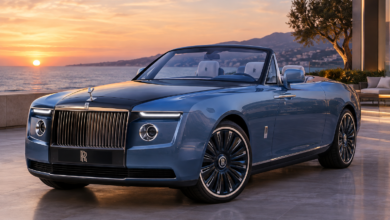
| Rolls-Royce Droptail Series | Modern Bespoke Hypercar | ~ $30,000,000 | Strictly limited to 4 units, each handcrafted for select private clients. |
| Rolls-Royce Boat Tail | Ultra-Luxury Bespoke | ~ $28,000,000 | 3 units worldwide featuring bespoke amenities inspired by nautical yacht design. |
| Bugatti La Voiture Noire | One-Off Production | ~ $18,700,000 | A unique one-of-one creation paying tribute to the lost Type 57 Atlantic. |
| Pagani Zonda HP Barchetta | Limited Edition | ~ $17,500,000 | Only 3 units built, featuring a fully open-top design and a naturally aspirated V12 engine. |
**Drivers of Car Pricing in the Investment Market**
Fluctuations in car prices at auctions and in open markets are governed by rigorous economic and engineering criteria:
**History and Provenance:** A car driven by legendary racing champions or owned by prominent public figures sees its value appreciate exponentially compared to the same model with an ordinary history.
**Authenticity and Mechanical Matching (Matching Numbers):** A vehicle retaining its original engine, transmission, and factory-documented paint color meets a fundamental prerequisite for achieving record-breaking prices.
**Supply Volume and Absolute Scarcity:** Cars produced as unique units or in extremely limited numbers (countable on one hand) attract fierce competition and are often cornered by major collectors; this insulates them from the volatility of inflation and currency depreciation.
**Technical Condition and Restoration:** Cars restored in specialized workshops certified by the manufacturer (such as Ferrari Classiche or Porsche Heritage) obtain authenticity certificates that enhance their liquidity at auctions.
**Risks and Challenges of Investing in the Car Market**
Despite the high financial returns associated with certain models, market participants face several structural challenges compared to traditional financial markets:
**Maintenance and Preservation Costs:** Luxury vehicles require specialized storage environments with precisely controlled temperature and humidity, alongside costly periodic maintenance to ensure engine readiness.
**Insurance and Transport Fees:** Insuring multi-million-dollar mobile assets entails high annual premiums, in addition to the costs of insured international shipping via specialized containers. Lack of immediate liquidity: Converting the car into cash requires months of preparation, documentation, and showcasing it at the appropriate auction based on the annual calendar (such as Monterey Car Week in California or the Rétromobile auction in Paris).
Keywords
Gold prices
Oil prices
Petroleum prices
Currency rates
Car prices
Most expensive metal in the world
Bitcoin